
Beyond If/Else: Agentic Workflows in SaaS
Why traditional boolean logic fails in complex SaaS journeys, and how autonomous AI agents are becoming the new brain of growth orchestration.
The Boolean Bottleneck
Take a look at the marketing automation platform you are currently using. Strip away the polished UI, the drag-and-drop canvas, and the colorful icons. What are you left with?
A giant, glorified series of TRUE/FALSE statements.
If user clicks link -> wait 2 days -> send email B. Else -> send email C.
For a decade, we have accepted this boolean bottleneck as the only way to build customer journeys. But human behavior is not binary, and the paths users take to discover value in complex B2B software are rarely linear.
The Spaghetti Graph Nightmare
When you try to map the infinite variations of human behavior using static If/Else logic, the system inevitably breaks down.
To account for edge cases, growth teams add more and more branches. Soon, your beautiful onboarding sequence turns into a "Spaghetti Graph"—a 150-node monstrosity that no single person on the team fully understands.
When a graph becomes this complex, three things happen:
- 1Technical Debt: Making a single change risks breaking downstream logic.
- 2Generic Fallbacks: To save time, marketers stop building granular branches and start dumping diverse users into generic "catch-all" buckets.
- 3The State Disconnect: A user upgrades their account in the app, but because they are stuck on "Node 47" of an inflexible email tree, they still receive a promotional offer to upgrade the next morning.
Enter the Agentic Workflow
The paradigm is shifting from Deterministic Routing to Agentic Execution.
Instead of hardcoding every possible pathway, modern orchestration uses Large Language Models and state-graph architectures to create autonomous routing agents.
In an agentic workflow, you don't define the path. You define the goal, the context, and the tools.
- The Goal: Get the user to successfully run their first API request.
- The Context: The user is a developer using Node.js, they logged in 5 minutes ago, but they just hit a 400 Bad Request error.
- The Tools: Send Email, Push In-App Modal, Alert Customer Success.
The orchestration engine assesses the real-time state and dynamically decides the next best action. It doesn't need an If/Else branch to tell it that a user experiencing consecutive API errors needs documentation, not a sales pitch.
Synapse Flow and the Agentic Core
This is the architectural leap we've built into Synapse Flow AI. By moving away from static decision trees and adopting a state-driven graph execution model, the system effectively reasons about the user's current status.
When the Cortex Engine generates content, it isn't just filling in templates at predetermined intervals. It evaluates the live behavioral stream, recognizes the friction point, and synthesizes the exact intervention needed to unblock the user at that specific millisecond.
Stop trying to predict every step your users will take. Give the system the goal, and let the agent orchestrate the journey.
Stop relying on boolean logic. Use the Visual Synapse Graph instead, and learn about the Death of the Linear Sequence.
Ready to boost your trial conversion?
Create your free account and be among the first to experience Synapse Flow AI.
Join our DiscordMore from the blog
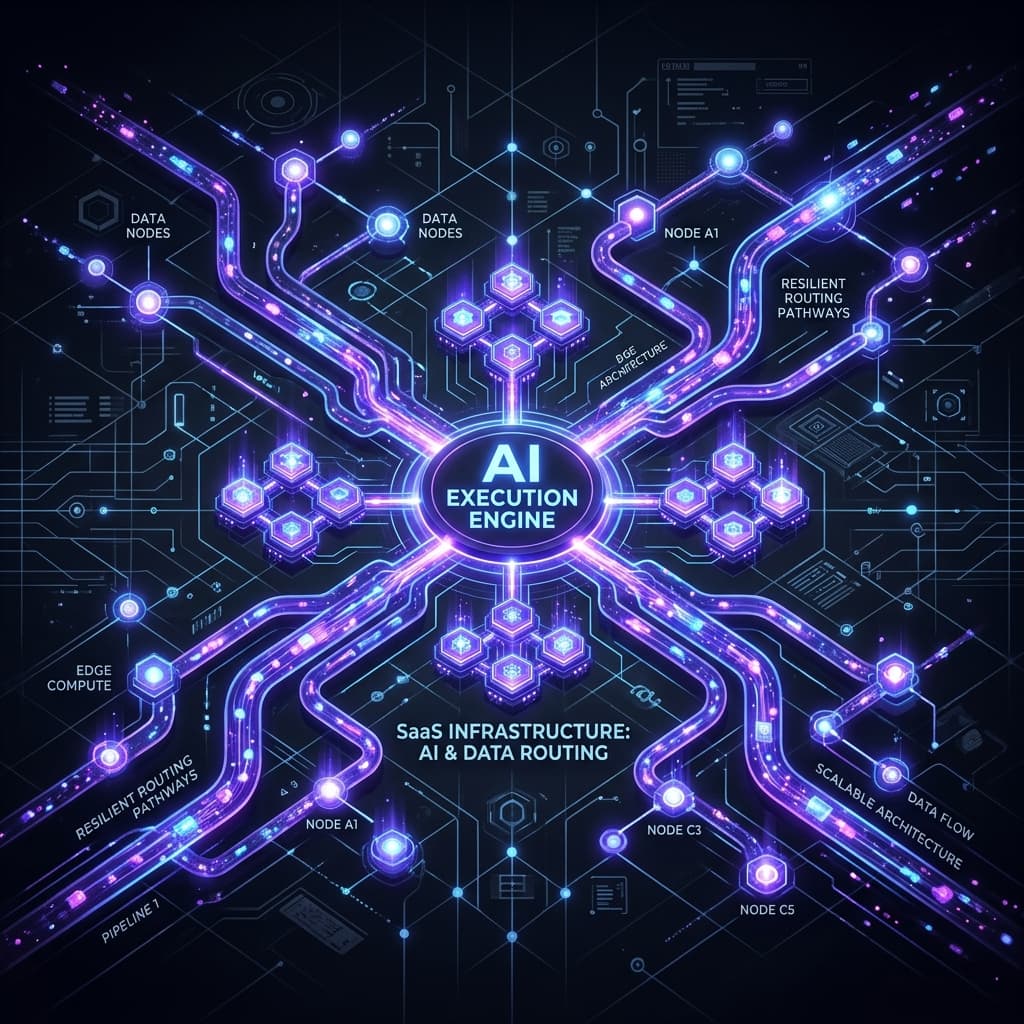
AI Execution Infrastructure: Building Resilient Marketing
Discover how an AI execution infrastructure builds resilient marketing systems that automatically adapt to schema drift and pipeline failures.

Behavior-Driven Automation: The End of Time-Based Drip
Time-based drip campaigns are obsolete. Learn why behavior-driven automation is the only way to maximize trial conversion in modern B2B SaaS.
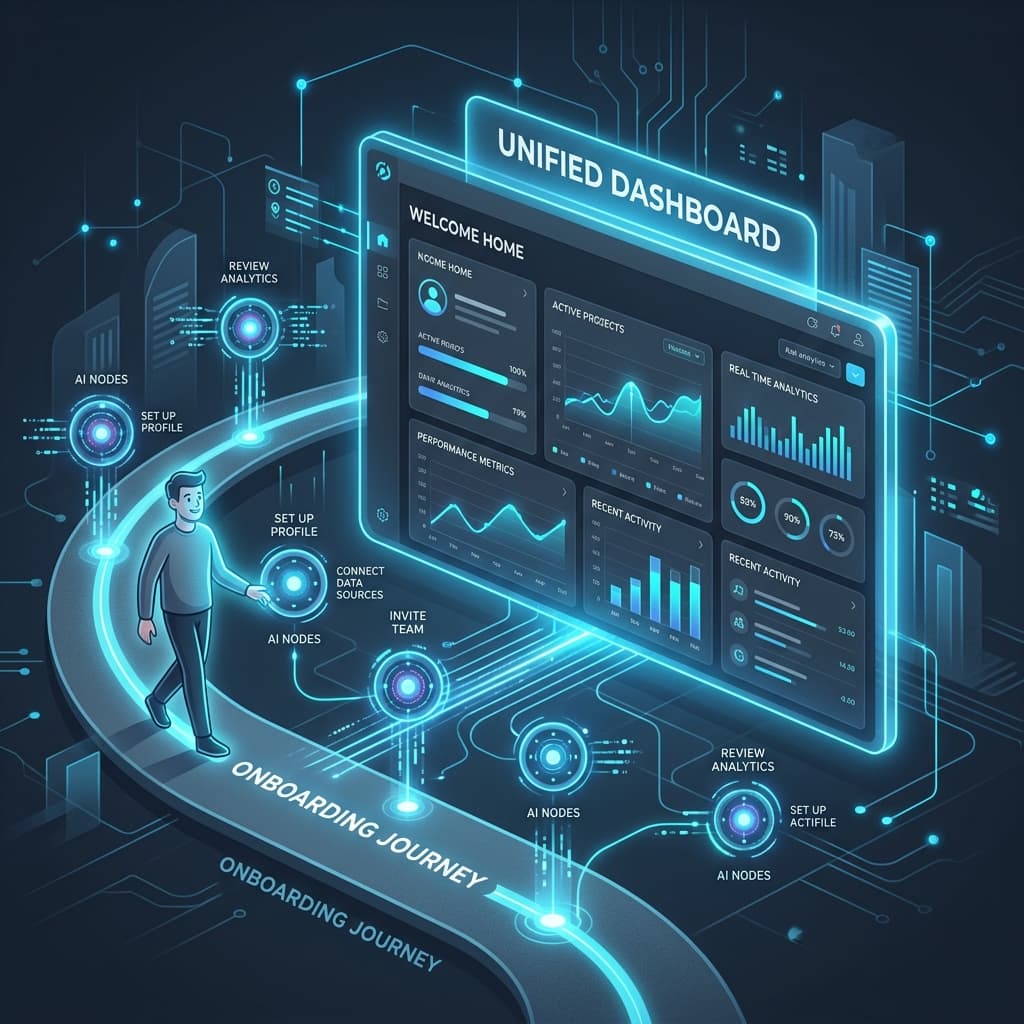
Orchestrating Onboarding: AI Unifies the User Experience
Explore how AI orchestrates personalized onboarding experiences that unify the first 24 hours of the user journey, accelerating time to value.