
Why PLG Companies Need Emails That Know What Users Built
PLG generates the richest behavioral data in SaaS. Learn why AI email sequences grounded in actual product usage outperform generic drip campaigns.
The PLG Email Contradiction
Product-led growth is the philosophy that the product sells itself. Users sign up, experience value, and convert — with minimal friction and no sales team required.
But the highest-ROI channel in SaaS is still email. And PLG companies, by design, generate the most valuable raw material for great email: dense, specific, product-level behavioral data.
Here is the contradiction: PLG companies sit on the richest trial data in SaaS, and their emails are often the most generic.
Not because their growth teams are unskilled. But because connecting what a user actually did in the product to what the next email should say is, without AI, an engineering problem that nobody has time to solve between sprints.
Product-led growth creates the richest signals in SaaS. AI email orchestration is what turns those signals into emails that reference your user's specific workflow by name.
The Behavioral Gap in PLG Emails
A typical PLG trial email reads like this: "Have you tried [Feature X]? It's one of our most popular tools for teams like yours."
This email was written before the user signed up. It will be sent regardless of whether the user has already been using Feature X for three days, has never heard of it, or tried it and failed.
The email a PLG product should be sending looks like this: "Your workflow 'Onboarding Sequence v2' has been live for 4 days. Teams who add a second workflow in Week 1 convert at 3.1x the rate of single-workflow users. Here's how to build one in 8 minutes."
This email references the user's actual workflow by name. It cites their specific trial timeline. It makes a statistical case for an action grounded in behavior the user has already demonstrated.
The AI Workflow Architect generates this email automatically. The workflow name comes from the PostHog event. The conversion statistic comes from the Aha! Detection engine. The eight-minute estimate comes from the RAG Knowledge Engine retrieving your product documentation.
How RAG Makes Product-Referenced Emails Possible
The reason most email platforms cannot generate product-aware emails is not a lack of AI capability — it is the absence of product context in the email generation layer.
SynapseFlowAI connects the RAG Knowledge Engine directly to the email generation pipeline. When a user reaches a behavioral milestone — first workflow deployed, first email sequence sent, first Stripe integration connected — the RAG engine retrieves:
- The feature documentation for what they just completed
- The next logical step in the onboarding progression, from your PRD
- The use case examples most relevant to their stated goal
- Conversion data for users who took the recommended next action
All of this grounds the AI-generated email in your actual product. The email is not a feature pitch — it is a contextually accurate, product-specific recommendation that arrives at the exact moment the user is most receptive.
The PLG Email Workflow on the Canvas
In SynapseFlowAI, a PLG email workflow is built around product events, not calendar dates. The Infinite Canvas visualizes it as a set of PostHog event listeners connected to AI email generation nodes:
- 1First workflow deployed → "Your first workflow is live — here's what converted users do next"
- 2First sequence sent → "Your first email sequence went out — here's how to read what it's telling you"
- 3Stripe integration connected → "Stripe is connected — here's the revenue trigger you should build first"
- 448-hour inactivity signal → "You were building [specific workflow name] — here's the one step that unlocks its full value"
Each email is generated fresh for each user, with their specific product context loaded via the Data Orchestration Hub. The Email Delivery layer handles sending via your own provider or SynapseFlowAI's managed infrastructure.
The Compound Effect of Product-Aware Email
The strategic advantage of product-aware email sequences is not just higher open rates on individual messages. It is the compound effect of every email making the next one more relevant.
Each product event updates the user's behavioral profile in the Execution Engine. Each email that references a specific product action reinforces the connection between email and product. Over a 14-day trial, users who receive product-aware emails engage more deeply with the product — because every email they open sends them back to a specific, high-value action rather than a generic homepage.
PLG and email are not in tension. Product-led growth gives AI email orchestration something real to say. And when AI email has something real to say, it converts.
Ready to boost your trial conversion?
Create your free account and be among the first to experience Synapse Flow AI.
Join our DiscordMore from the blog
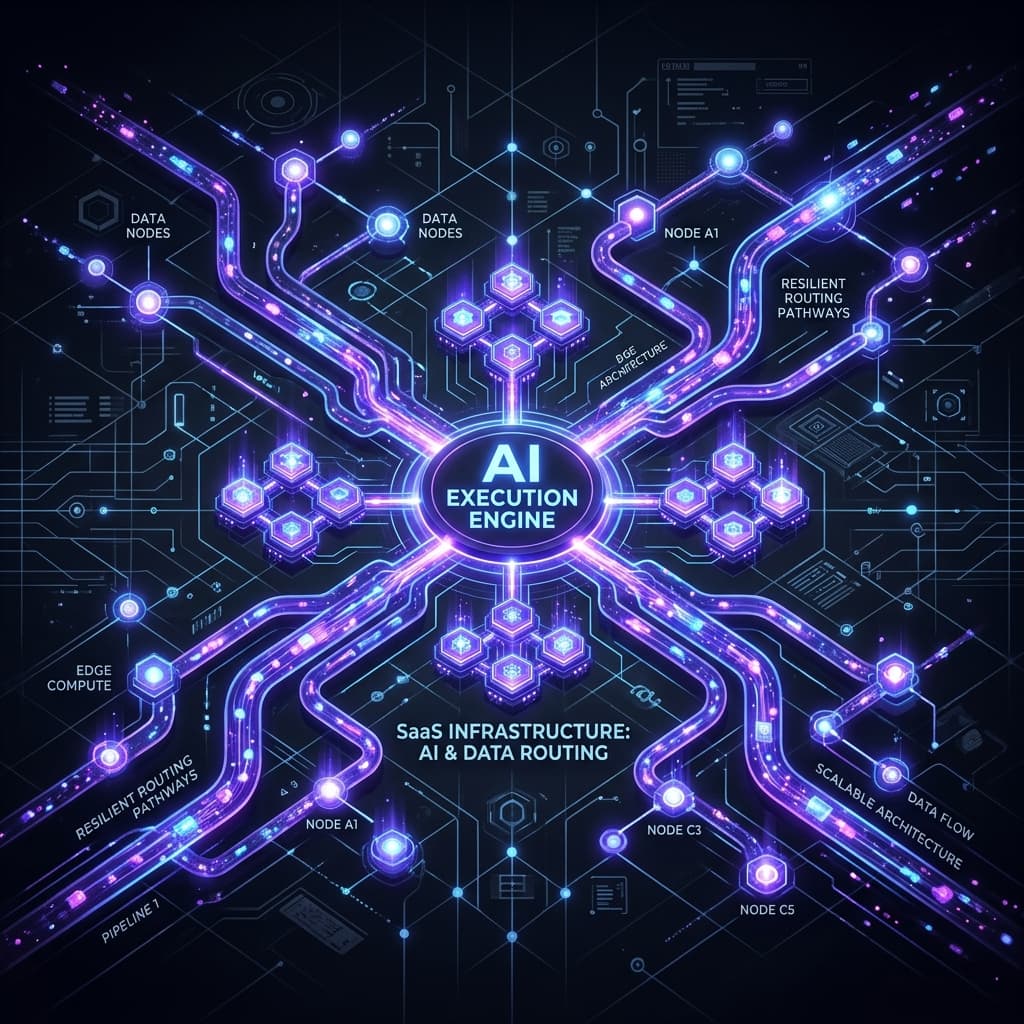
AI Execution Infrastructure: Building Resilient Marketing
Discover how an AI execution infrastructure builds resilient marketing systems that automatically adapt to schema drift and pipeline failures.

Behavior-Driven Automation: The End of Time-Based Drip
Time-based drip campaigns are obsolete. Learn why behavior-driven automation is the only way to maximize trial conversion in modern B2B SaaS.
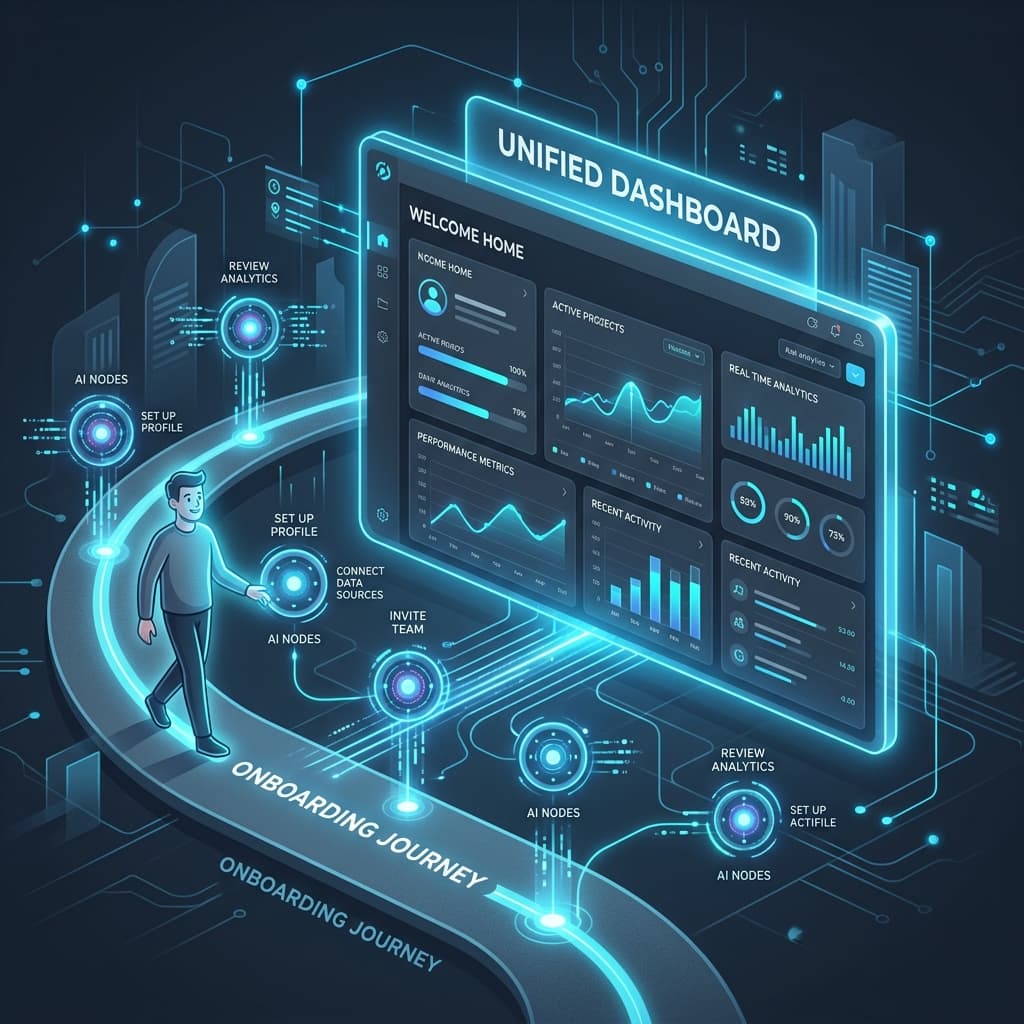
Orchestrating Onboarding: AI Unifies the User Experience
Explore how AI orchestrates personalized onboarding experiences that unify the first 24 hours of the user journey, accelerating time to value.