
The Onboarding Fork: One Flow Kills Conversion
One generic welcome flow serves every persona equally—and therefore serves none well. Learn how session-zero signals power adaptive onboarding forks.
The Persona Problem Nobody Admits
Every B2B SaaS product is bought by one person and used by many. A VP of Sales signs the contract, but the developer configures the integration. The marketing lead builds the first campaign. The product manager maps the workflow. The customer success manager tracks the outcomes.
They all receive the same welcome email.
They all see the same onboarding checklist.
They all follow the same four-step tour.
The single most expensive design decision in most SaaS products is the one nobody made consciously: the decision to have one onboarding flow.
This is not a copy problem. It is not a UX problem. It is an architecture problem — and it has a measurable cost: the gap between your actual trial-to-paid conversion rate and what it could be if every user experienced an onboarding path designed for their specific role, goals, and technical depth.
Session Zero: The Most Underused Data Point in SaaS
Most behavioral analytics platforms focus on what happens after a user has been in the product for a few sessions. They track feature adoption, milestone completion, and retention curves. All of this data is valuable — but it arrives too late to rescue the onboarding experience.
The most actionable data point in a user's trial is the one that arrives before they ever click anything: session zero signals.
Session zero signals are the pieces of information available at or before first login:
- The signup form itself. Role, company size, use case — if you ask even two qualifying questions, you have already forked the journey.
- The referral source. A user who clicked through from your API documentation page has a completely different intent profile than a user who came from a LinkedIn ad targeting marketing directors.
- Firmographic enrichment. Tools like Clearbit, Apollo, or 6sense can append role, seniority, industry, and tech stack data to a user record the instant an email address is known — before the user even confirms their account.
- The domain. An email from a Series B startup's engineering domain and an email from a Fortune 500 company's marketing division are not the same user, even if they signed up through the same landing page.
- UTM parameters. Campaign source and content tags reveal which problem framing resonated enough to drive the click.
Aggregated together, these session zero signals form a pre-behavioral persona classification. You do not need to wait for the user to show you who they are. You already know.
The Four Personas and Their Divergent Activation Paths
In most B2B SaaS products, the user base collapses into a small number of core personas whose definition of "value" — and whose path to their Aha! Moment — is fundamentally different.
The Developer
The developer evaluates your product as infrastructure. Their question is not "can this help my team?" Their question is "will this integrate cleanly with what we already have?"
For the developer, the Aha! Moment is a successful API call, a webhook that fires correctly, or an SDK that installs in under three minutes. Everything before that is friction. Everything after it is momentum.
What their onboarding fork should contain:
- Immediate surface of the API documentation and authentication keys
- A sandbox environment with pre-seeded test events
- A copy-paste integration snippet calibrated to the tech stack detected from their domain or signup context
- Zero marketing language — they will leave the moment they smell a tutorial written by a content team rather than an engineer
What kills their activation: A step-by-step "guided tour" of a UI they will never use. A video walkthrough. A checklist that starts with "Add your brand colors."
The Marketing Lead
The marketing lead evaluates your product as a revenue lever. Their question is "how fast can I run my first campaign and see a result I can report on?"
For the marketing lead, the Aha! Moment is a workflow live in production — an email sent, a segment populated, a conversion event tracked. They need to get from zero to "I just did something" in the first session or the trial is already lost.
What their onboarding fork should contain:
- A pre-built workflow template for the use case that brought them in (if they came from a retargeting campaign about abandoned trial recovery, their first template should be an abandoned trial recovery sequence)
- A one-click sample audience populated from their existing tool integrations
- Concrete metrics from their first sent workflow, rendered immediately — open rate estimated, projected conversion lift displayed
- Language that frames every feature in terms of revenue outcomes, not technical capabilities
What kills their activation: Being asked to connect a data warehouse before they can send their first email. A setup flow that starts with API configuration.
The Product Manager
The product manager evaluates your product as a system. Their question is "how does this fit into our existing growth infrastructure, and can I trust it to run without me?"
For the product manager, the Aha! Moment is a workflow that executes correctly across multiple branching conditions — one that demonstrates the platform's logic, not just its surface. They want to understand the system before they commit to it.
What their onboarding fork should contain:
- A high-level architecture overview: how data flows in, how decisions are made, how actions are executed
- A complex example workflow — not a simple drip sequence, but a multi-branch, conditional flow with realistic triggers and fallback paths
- Documentation of the Behavioral State Graph model, presented as a technical specification
- Integration breadth — a map of every data source the platform can ingest
What kills their activation: A simplified, hand-holding tutorial that assumes they do not understand how event-driven systems work.
The Sales or Revenue Leader
The revenue leader evaluates your product as a conversion machine. Their question is purely commercial: "how many more trials will convert if we deploy this?"
For the revenue leader, the Aha! Moment is a revenue number — a lift percentage, a conversion rate comparison, an ROI estimate tied to their specific deal velocity and trial volume.
What their onboarding fork should contain:
- An immediate ROI calculator seeded with their company's estimated trial volume and current conversion rate
- Case studies and benchmarks from their specific industry and company stage
- A 90-day success plan — a concrete sequence of what to deploy first, second, and third, with expected lift at each stage
- A direct line to a human — a calendar link, a Slack connect invite, a concierge email — because the revenue leader converts through relationship, not self-serve discovery
What kills their activation: Being sent through a self-serve onboarding flow at all. Showing them a node editor before showing them a revenue chart.
Why Generic Onboarding Fails All Four
The standard single-flow onboarding is designed, consciously or not, for the median user. It is the average of all four personas — which means it is optimal for none of them.
The developer gets marketing language and a brand kit setup step. The marketing lead gets asked to configure an API before she can run a campaign. The product manager gets a simplified tour that underestimates her technical depth. The revenue leader gets a self-serve flow and no human contact.
Each of them bounces from a different friction point. Each of their churn events looks different in your analytics. But the root cause is identical: a single flow that served none of them.
Building the Fork: The Mechanics
The onboarding fork is not a new concept in principle, but most implementations are superficial: change the hero image based on the role, or send a slightly different welcome email. This is personalization theater, not architectural forking.
A genuine onboarding fork operates at three levels:
Level 1: Content Personalization
The copy, imagery, and examples that appear throughout the onboarding flow are role-calibrated. The developer sees API-first language and code snippets. The marketing lead sees campaign-outcome language and conversion rate benchmarks. This is the easiest level to implement and the most common to half-implement.
Level 2: Feature Sequencing
The order in which features are introduced is persona-specific. The developer's first action is authentication setup. The marketing lead's first action is template selection. The product manager's first action is the system architecture overview. The flow's decision tree — which step appears next — is conditional on the persona classification, not universal.
This is where the Infinite Canvas becomes essential infrastructure rather than a visualization tool: the fork branches are actual distinct workflow graphs, not variant copies of one graph.
Level 3: Integration Prioritization
The integrations surfaced during setup are persona-ranked. A developer persona triggers a priority display of the Webhook, REST API, and SDK options. A marketing lead persona surfaces Brevo, HubSpot, and Google Analytics first. This ranking is not manual — it is driven by the session zero classification and continuously refined by Aha! Moment detection models that have measured which integrations correlate with conversion for each persona type.
The Session Zero Classification Engine
The orchestration layer that makes this work is not complex in concept, but it requires real-time execution to be effective.
At the moment a new user is created, the Data Orchestration Hub executes a classification sequence:
- 1Enrich: Append firmographic and role data from the email domain and any available third-party enrichment source.
- 2Score: Evaluate signup form responses, referral source, and firmographic data against the persona classification model.
- 3Classify: Assign a primary persona (with a confidence score) and a secondary persona for edge cases.
- 4Branch: The AI Workflow Architect activates the corresponding onboarding branch in the Infinite Canvas, setting the trigger sequence, the email cadence, and the in-app UI prioritization.
- 5Adapt: As the user takes their first actions, the behavioral signals update the persona confidence score. If a user classified as a marketing lead immediately navigates to the API documentation, the classification adjusts — and the fork adjusts with it.
This last step is the most important. The fork is not a rigid assignment. It is a probabilistic starting position that real behavior can override. The system is not forcing a persona onto the user; it is making its best inference at session zero and then continuously correcting as evidence accumulates.
Measuring Fork Performance
Once the onboarding fork is live, the measurement model shifts.
You no longer measure "overall trial-to-paid conversion." You measure:
- Time-to-Aha! by persona — which fork reaches the activation milestone fastest?
- Aha! completion rate by persona — which fork is most reliably getting users to their value moment?
- Session-one depth by persona — which fork generates the most meaningful first-session engagement?
- Fork misclassification rate — how often does a user's first-session behavior contradict their initial classification, and how quickly does the adaptive model correct?
These metrics expose optimization opportunities that aggregate conversion data completely obscures. A drop in overall conversion might mask a healthy developer fork and a failing marketing lead fork — a distinction that demands entirely different interventions.
From One Flow to Many, Without the Operational Overhead
The objection most growth teams raise to persona-based onboarding forks is operational: "We can barely maintain one onboarding flow. How do we maintain four?"
This is the wrong frame. A well-designed fork is not four independent flows requiring four independent maintenance cycles. It is one orchestration layer with persona-conditional branches. The shared components — account setup, billing configuration, team management — appear in every fork. Only the persona-specific layers — feature sequencing, template selection, integration prioritization — diverge.
The AI Cortex Engine handles content generation for each branch without requiring a copywriter to produce four variant versions of every onboarding email. The system generates role-calibrated content dynamically, grounded in your product documentation via the RAG Knowledge Engine, and customized to the specific user's classification at send time.
The operational overhead of a fork, built on an AI-native orchestration layer, is far lower than the revenue cost of a generic flow that serves no persona well.
Every user who signs up has already told you who they are. The only question is whether your onboarding is listening.
Ready to boost your trial conversion?
Create your free account and be among the first to experience Synapse Flow AI.
Join our DiscordMore from the blog
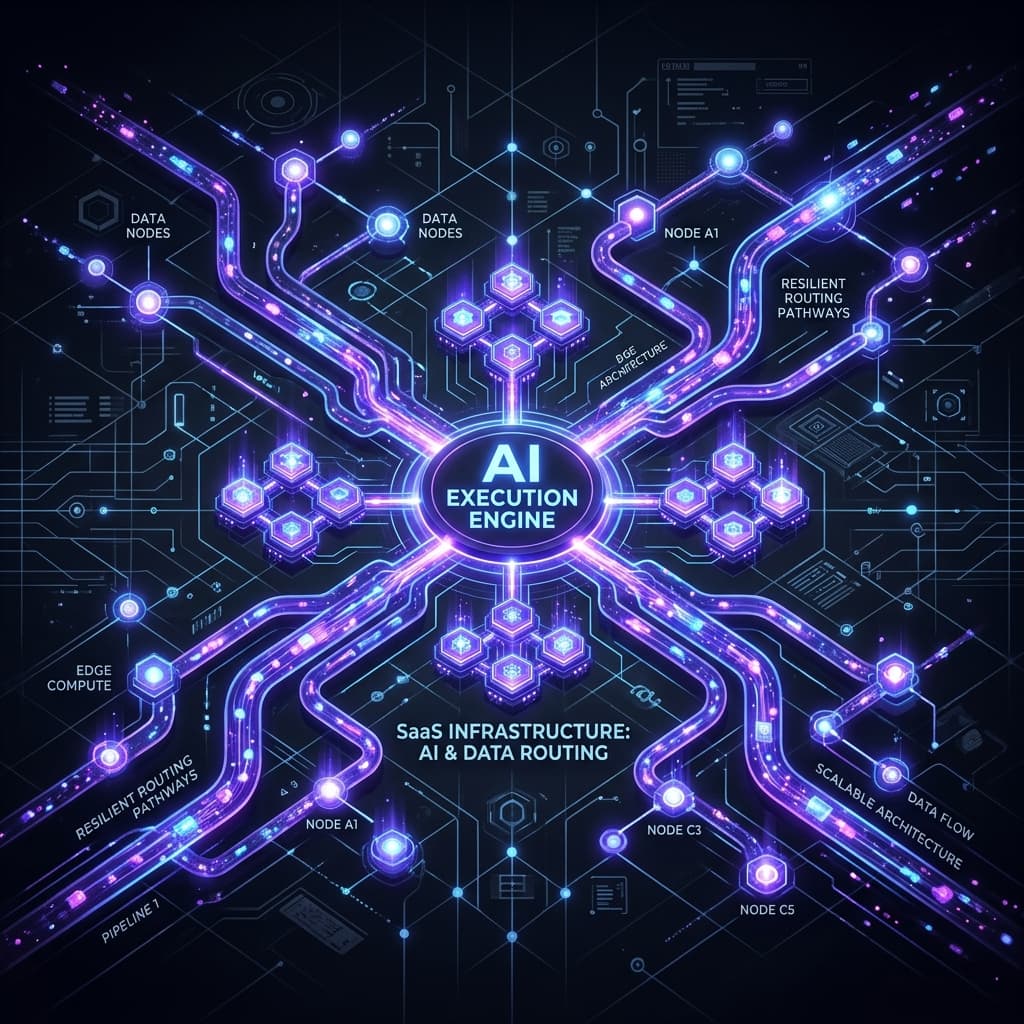
AI Execution Infrastructure: Building Resilient Marketing
Discover how an AI execution infrastructure builds resilient marketing systems that automatically adapt to schema drift and pipeline failures.

Behavior-Driven Automation: The End of Time-Based Drip
Time-based drip campaigns are obsolete. Learn why behavior-driven automation is the only way to maximize trial conversion in modern B2B SaaS.
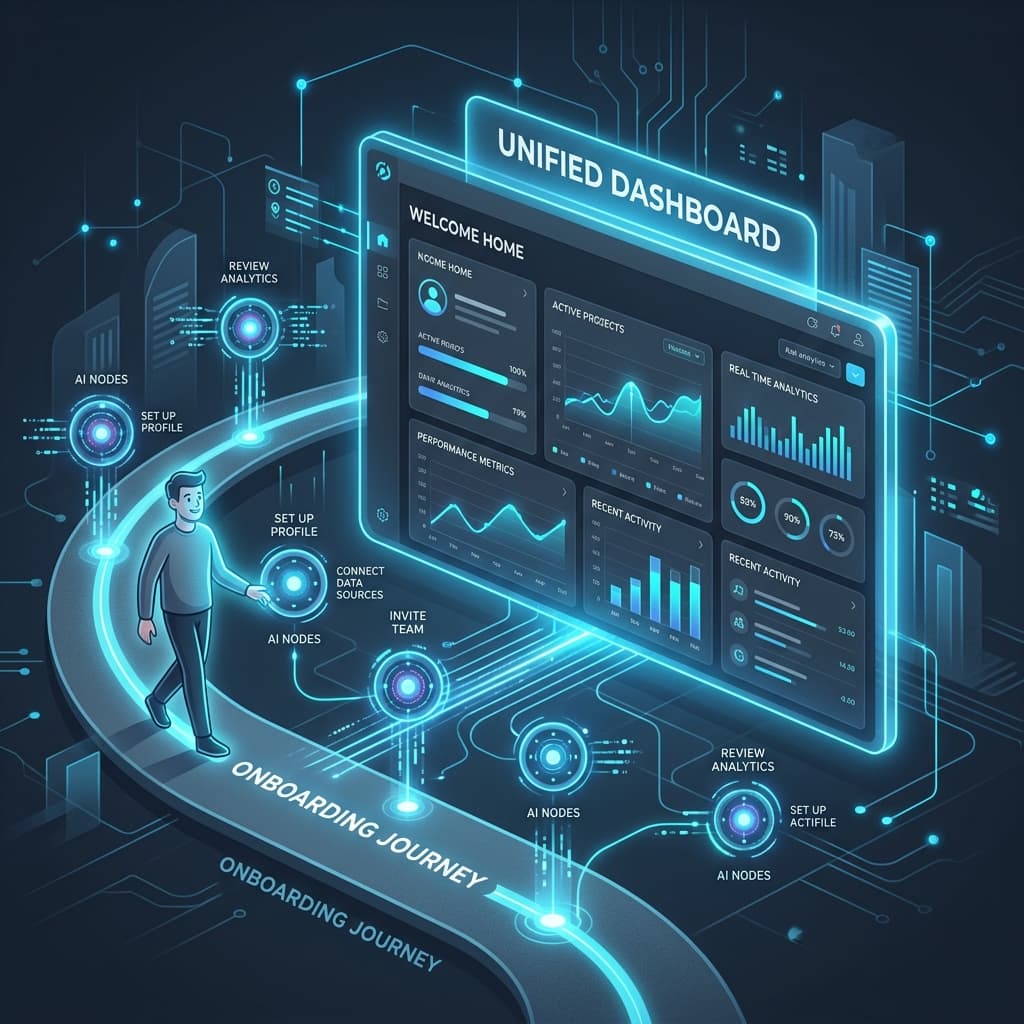
Orchestrating Onboarding: AI Unifies the User Experience
Explore how AI orchestrates personalized onboarding experiences that unify the first 24 hours of the user journey, accelerating time to value.